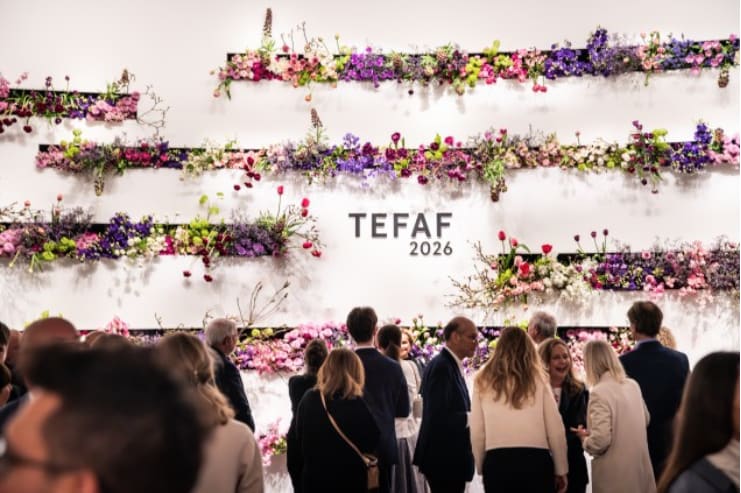
At TEFAF Maastricht, the market moves differently. The atmosphere often feels closer to that of a museum than to a typical art fair—quiet, reverential, and contemplative. Months before the opening, museum curators often have already studied catalogs and preview lists to identify the objects they want to examine in person. Walking the aisles with patrons and board members, they stop in front of the targeted works, discussing their quality and fit and quietly building the case for acquisitions with their boards. Few fairs have such an encyclopedic range, spanning Roman marbles to Dutch Golden Age painting to contemporary design or jewelry plus Chinese antiquities and African and Oceanic artifacts. It’s something of a “museum mall,” where centuries of artistic production coexist.
At the 36th edition of the Maastricht fair, the overall mood felt markedly and deliberately different from the high-speed, transactional vibe typical of contemporary fairs. That said, several dealers had already made sales by the end of the preview days, though they often had to wait for permission to report them to the press.
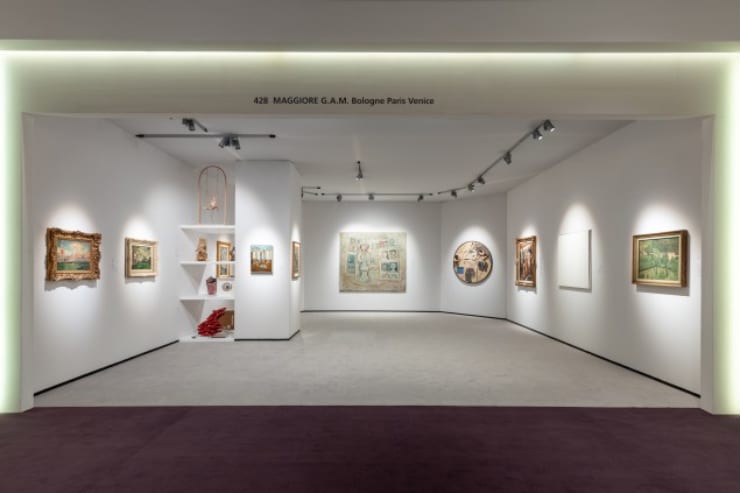
At TEFAF, it is more common than at other fairs to hear Italian spoken in the aisles, as Italian dealers maintain a distinctive presence in both the Old Master and postwar and modern sections, often through multigenerational enterprises. One of these is the long-established Bologna-based gallery Galleria D’Arte Maggiore g.a.m., a regular at TEFAF and at fairs such as Art Basel, often presenting a distinctive selection of Morandi and other postwar Italian masters. These are names that, despite being less visible in the U.S. market, still trigger strong interest in Italy, as in the Etruscan-inspired timeless beauty of Massimo Campigli’s works, a master of the Novecento’s revisitation of classical forms. On hold in the early hours was his monumental painting Casa (1964), which once hung in the St. Tropez villa Campigli built for himself with Gio Ponti. The work reflects the long collaboration between the artist and Ponti, who frequently invited Campigli to create works for his architectural projects, most notably the fresco he executed between 1939 and 1940 for the Palazzo Liviano at the University of Padua, designed by Ponti in 1934.
Other mid-weekend confirmed sales included works by Giorgio De Chirico, Bertozzi & Casoni, Claudine Drai and Arman. As the gallery entered the public hours, there were also active negotiations for two museum-grade works: a surreal and enigmatic De Chirico painting of Bagni misteriosi (1974), an imaginary motif he would later develop into an iconic public sculpture for the Triennale museum in Milan, and a significant landscape by Giorgio Morandi from the collection of Emilio and Maria Jesi, who acquired the painting directly from the artist and were among the principal donors of Morandi works to the Pinacoteca di Brera. It was included in early significant surveys of the artist at the Palais des Beaux-Arts, Bruxelles (1950) and the Kunsthalle Bern (1965).