
Morning Meditation (1911–1912) and its empty perspective opening onto the sea. The Great Tower (1913), with the esotericism of a deified architecture. The Transformed Dream (1913), featuring a stone mask acting as a divine oracle before symbolic fruits. Paris too plunges into the delights of mystery with Giorgio de Chirico (1888–1978), the inventor of metaphysical painting, who fascinated Apollinaire, charmed Paul Guillaume, and even André Breton. His father, a railway engineer in Thessaly and an art lover, introduced him to ancient Greece. At age 12, young Giorgio was enrolled at the Polytechnic Institute of Athens, where he took drawing and painting classes. But it was in Munich, after the death of his sister and father, that the native of Volos attended courses at the Academy of Fine Arts and discovered Friedrich Nietzsche, Arthur Schopenhauer, and the paintings of Arnold Böcklin. Back in Italy in 1910, his first series of paintings frequently borrowed the word enigma for their titles (Enigma of an Autumn Evening, 1909). Here is a visual riddle in art history to decipher through more than one hundred and fifty works.
“Giorgio de Chirico, 1888–1978, The Fabrication of Dreams”, from 13 February to 24 May at the Musée d’Art Moderne de la Ville de Paris,
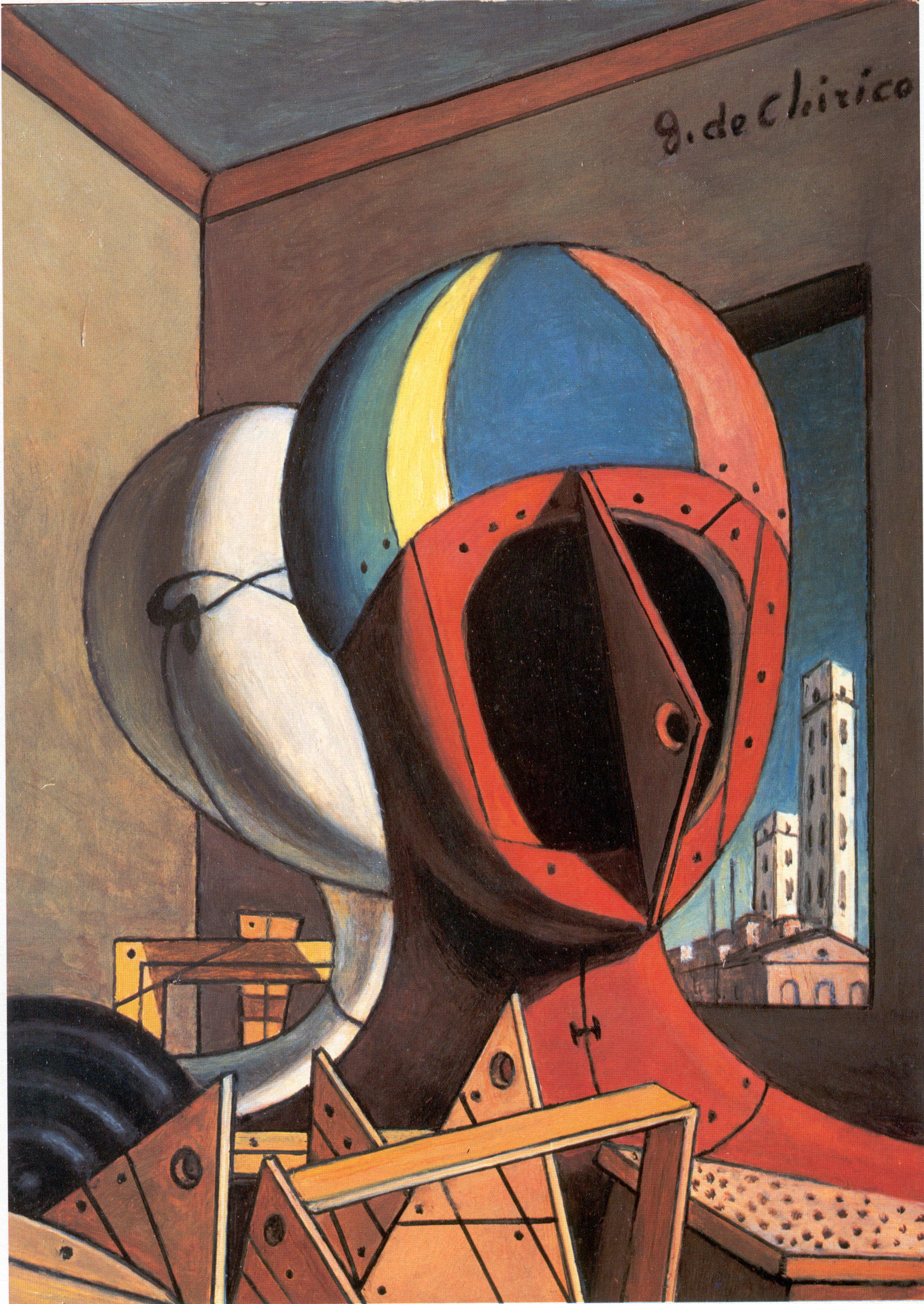
Giorgio De Chirico, The masks, 1973. Private collection, courtesy Galleria d'Arte Maggiore, Bologna
